

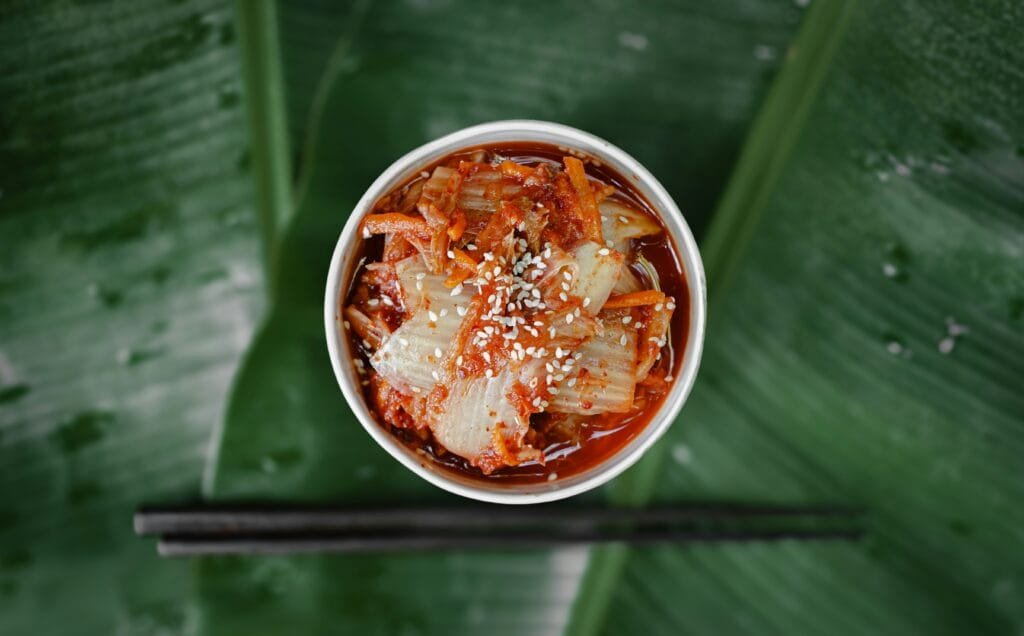
At its core, kimchi is a traditional Korean dish made from salted and fermented vegetables.
The version most people in North America recognize is napa cabbage kimchi, but that’s just the beginning.
Kimchi can be made with:
- Napa cabbage (the classic)
- Radish
- Cucumber
- Green onion
- Spinach
- Even milder variations like “white kimchi” (without chili peppers)
In fact, there are hundreds of varieties, each shaped by region, season, and personal preference.

How Kimchi Is Prepared
There’s no one definite way to make kimchi, as there are many varieties with their own spin, but here’s a general method:
1. Salting the Vegetables
Vegetables (like cabbage) are chopped and soaked in salt, which draws out excess moisture and creates the perfect environment for fermentation.
2. Creating the Flavor Base
A paste is made using ingredients like garlic, ginger, Korean chili flakes (gochugaru), fish sauce or other umami elements.
3. Mixing & Packing
The vegetables are coated in the paste and packed tightly into a container.
4. Fermentation
Beneficial bacteria break down sugars into lactic acid in a process called lacto-fermentation, giving kimchi its tangy flavor and probiotic richness.
Depending on temperature, this can take a few days to weeks.
Why Kimchi Is So Good for You
1. It’s Packed with Nutrients
Kimchi is low in calories but rich in:
- Vitamins A, B6, C, and K
- Iron, calcium, and potassium
- Antioxidants
Because it’s made from vegetables, you’re getting a dense concentration of nutrients in every bite.
2. It Supports Gut Health
Thanks to fermentation, kimchi is loaded with probiotics: beneficial bacteria that support your gut microbiome.
This can help improve digestion, reduce bloating, and support overall gut balance
3. It May Reduce Inflammation
Ingredients like garlic, ginger, and chili peppers contain compounds that may help lower inflammation in the body.
4. It Supports Your Immune System
Kimchi contains:
- Vitamin C
- Antioxidants
- Beneficial bacteria
All of which work together to help strengthen immune function.
5. It Can Help You Feel Fuller, Longer
With its combination of fiber and low calorie content, kimchi can support satiety, which helps you feel satisfied without overeating.
A Few Things to Keep in Mind
Kimchi is powerful, but like anything, balance matters.
- It can be high in sodium, so moderation is key
- Unpasteurized versions contain more probiotics
- Proper storage is important to maintain freshness and safety
Think of it as a supporting player in your meals, not something you need in huge amounts to feel the benefits.
Final Thoughts
Kimchi is more than just something you add on the side of a meal. It’s a simple combination of vegetables, seasoning, and time that turns into something flavorful, versatile, and genuinely beneficial for your body. From the way it’s prepared to the variety of ingredients you can use, it offers both flexibility and depth in a way that feels approachable.
Whether you stick with napa cabbage kimchi or explore other varieties, even adding a small amount to your meals can make a noticeable difference, both in flavor and in how you feel.
Disclaimer: The recipes and nutritional content shared on this blog are based on personal experience and general wellness principles. They are not intended to diagnose, treat, cure, or prevent any health condition. Please consult with a healthcare provider or registered dietitian before making any significant dietary changes, especially if you have allergies or health conditions.
You Might Also Like:
The Surprising Health Benefits of Ginger: Nature’s Digestive Hero
Let’s Talk About Fiber: Why It’s More Important for You Than You Think