
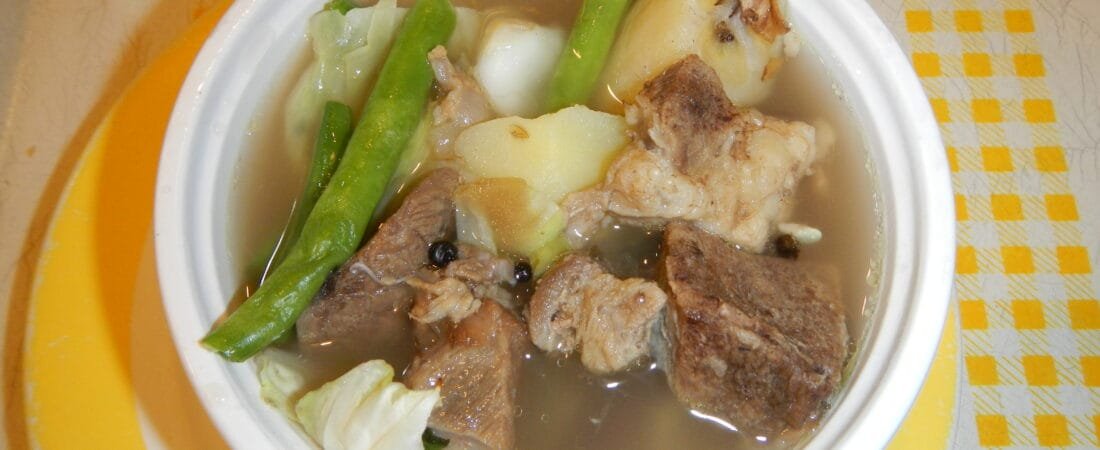
Featured Image by By Ramon FVelasquez – Own work, CC BY-SA 3.0, https://commons.wikimedia.org/w/index.php?curid=29658446
When the air gets a little crisp and the evenings call for something hearty, nothing hits quite like a bowl of Filipino Nilaga. It is one of those dishes that feels like a hug in food form: warm, savory, and deeply nostalgic. To many Filipino families, Nilaga is more than soup. It’s a weekend staple, a centerpiece on chilly days, and the kind of meal that brings everyone to the table without a word.
What is Nilaga?
“Nilaga” literally translates to “boiled” in Tagalog, and that’s precisely what it is: a simple boiled soup. But simplicity doesn’t always mean plain. The beauty of Nilaga can be found in its gentle layers of flavor.
Traditionally, Nilaga is made with beef shank, bone marrow, or sometimes pork ribs. The long simmering brings deep umami into this dish, whereas vegetables such as cabbage, potatoes, carrots, and green beans add natural sweetness and heftiness. It’s often seasoned simply with salt, pepper, and fish sauce, allowing the natural flavors of the ingredients to shine.
Nilaga is that warm, comforting type of meal. You can’t hurry it; the simmering process alone teaches patience. The aroma that fills the kitchen while it cooks is almost therapeutic, wrapping the home in warmth and nostalgia.
For many, Nilaga is a comfort that brings family dinners, rainy afternoons, and weekends with relatives to mind. My aunt always seemed to have some simmering on her old gas stove. She never measured anything, just eyeballed a sprinkle of salt, a dash of fish sauce, and whatever vegetables she had on hand from the market, but it was perfect every time. Her whole house smelled of broth and onions, as kids my cousins and I loved peering into the pot and watching meat fall off the bone. And then, when we finally sat down to eat, we would all fight over who got the marrow inside the bones!
Now, every time I cook Nilaga, I think of her. I think about how food relates generations together and how one bowl of soup can feel like home, no matter where you are.
Ingredients
Here’s what you’ll need to make a generous pot of Nilaga that serves about 4–6 people:
- 2 lbs beef shank or bone-in short ribs
- 1 medium onion, peeled and quartered
- 2 cloves garlic, crushed
- 2 medium potatoes, peeled and quartered
- 2 carrots, peeled and sliced into thick pieces
- ¼ head green cabbage, roughly chopped
- 1 cup green beans, trimmed
- 1–2 tbsp fish sauce (to taste)
- Salt and pepper to taste
- 8 cups water
Optional: 1 small cob of corn, sliced into sections – adds sweetness to the dish
How to Make It
- Simmer the meat: Place the beef, onion, garlic, and water in a large pot. Bring to a boil, then reduce the heat and simmer for about 1½ to 2 hours. Skim off the foam and fat that comes to the top, as this will keep the broth clear.
- Season with fish sauce, salt, and pepper to taste once beef is tender.
- Add vegetables: Add the potatoes and carrots, cooking until just tender. This should take about 10–15 minutes. Following that, add in the green beans and cabbage, simmering just until the vegetables soften but still hold their shape.
- Serve hot, ladling into bowls to make sure everyone gets broth, vegetables, and tender meat. Serve with steamed rice and a small dish of fish sauce with calamansi or lemon juice on the side for dipping.
Variations of Nilaga
The traditional version uses beef, but there are regional and modern spins worth trying:
- Nilagang Baboy: Uses pork ribs or belly instead of beef.
- Chicken Nilaga: Lighter in nature, it cooks much faster and works beautifully with a touch of ginger.
- Nilagang Baka with Corn (Beef): This adds a sweet touch and some color to the classic recipe.
If you’re vegetarian or just want to try something new, try subbing in mushrooms and vegetable broth for the meat. Unconventional, but it captures that comforting aspect of Nilaga nonetheless.
Health Benefits
Nilaga is not only delicious but also healthy. The long-braised broth is filled with collagen and minerals from the bones, while the vegetables add some fiber and vital vitamins. It is naturally gluten-free, hydrating, and can easily be made low-sodium or low-fat, depending on one’s dietary needs.
How to Elevate Your Nilaga
The beauty of Nilaga is in its simplicity, but there’s always room to make it your own:
- Add a few whole peppercorns for a deeper kick.
- Toss in baby bok choy or pechay (Chinese white cabbage) for extra greens.
- Add a squeeze of calamansi or lemon juice for brightness.
- For richer flavor, brown the meat before simmering. It adds extra depth to the broth.
There’s something so comforting about making Nilaga from scratch as the weather turns cooler. You can enjoy your Nilaga with a bowl of jasmine rice, patis with chili on the side, and calamansi to balance it out. You can make it even more hearty with a boiled egg on the side or alongside some simple side dishes like ensaladang talong. Nilaga may not have the flashiness of other Filipino dishes, like adobo or sinigang, but that is what makes it timeless. So as autumn sets in, take an afternoon and make a pot of Nilaga. Let its flavorful broth warm you up with every spoonful.