

Terrariums are self-sustaining little worlds that let you bring nature indoors, with no sprawling backyard required. Whether you’re decorating your desk, creating a living piece of art, or just looking for an easy hobby that connects you with plants, terrariums are a wonderful way to blend creativity and ecology. This guide covers the basics: what you’ll need, how to build one, and how to keep it thriving.
I still remember my first terrarium. It wasn’t fancy, just an old 2-gallon storage jar I cleaned out one rainy afternoon. I layered in some gravel, a bit of mesh, and soil from my garden, then tucked in a few sprigs of moss and a fern cutting I’d rescued from the backyard. Watching that little ecosystem come alive over the next few weeks was oddly comforting. It was genuine joy to make, and it was so calming to just sit and watch for a while: a moment of natural stillness within my home. It sparked a hobby that I’ve maintained to this day!
What Exactly Is a Terrarium?
A terrarium is essentially a miniature, self-contained slice of nature housed within a glass container. Depending on whether it’s open or closed, it can mimic different natural environments. Closed terrariums act like tiny rainforests, recycling moisture and maintaining humidity, while open terrariums create drier habitats better suited for succulents or air plants.
Think of it as a living piece of décor: beautiful to look at and surprisingly low-maintenance.

Step-by-Step: How to Make a Basic Terrarium
- Choose Your Container
To make a basic terrarium, start with a transparent jar. If you’re going for a closed terrarium, make sure that the lid is airtight to prevent moisture from escaping. You can use any size container you want, as long as it fits your desired plants’ specifications. Some people love tiny moss terrariums, while others go big with lush fern-filled setups. - Create Your Drainage Layer
Start with about half an inch to two inches of gravel or small pebbles at the bottom. This layer helps prevent root rot by giving excess water somewhere to go. If your container is tall and narrow, use a deeper layer to help manage moisture better. - Add a Barrier
This step often gets skipped, but it’s crucial. Without a barrier, soil can seep into your drainage layer, blocking water flow and creating a breeding ground for mold and anaerobic bacteria. To make a barrier, cut some window mesh (or any non-compostable material that will allow water to pass through) to the appropriate size of your container and place it atop your drainage layer. - Add Your Soil (or Substrate)
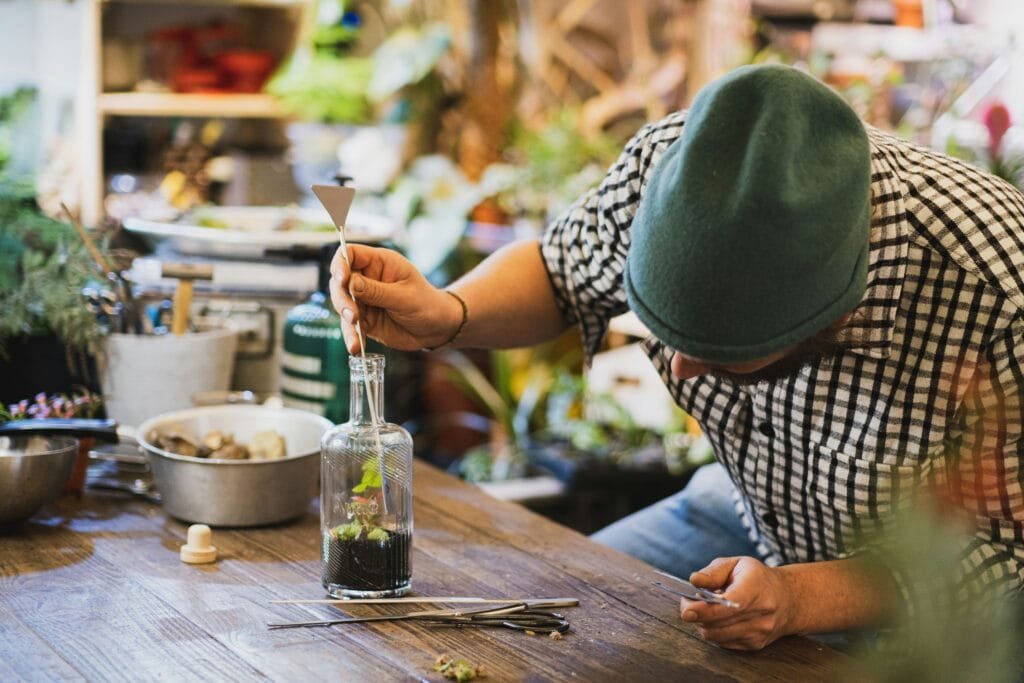
Now you can add your soil. The type of soil you add will depend on the plants you have inside. If you’re going with typical ferns, red nerve plants, or pothos, a moist layer of soil that is no more than a quarter of the height of your container will be perfect. Many also mix their own blends of soil, mixing peat moss, sphagnum moss, or perlite.If you’re thinking of making a succulent terrarium, you can add what’s called “succulent soil” as your substrate, which drains water quickly.Note: While many succulents can work well inside terrariums, cacti are not recommended for closed terrariums. Closed terrariums are often too humid for them, which can lead to rot. - Landscape Your Miniature World
This is the fun part! After your substrate is added, you can now landscape your terrarium in any way you wish. If you plan on keeping your terrarium against a wall, you can consider foreground and background plants and décor. Rocks and pebbles of varying sizes and pieces of driftwood can also provide an aesthetic purpose, as well as being somewhere moss can attach and any critters (like springtails and isopods) can hide. You can also attach air plants to the driftwood for a beautiful layered effect!Note: Do your best to not have plants touch the walls of your container, as prolonged contact with the moisture collecting on the sides of the glass can lead to mold, rot, or algae. If they grow to touch the walls or lid, you can go in and trim them.
Choosing the Right Plants
When it comes to terrarium plants, slow-growing, humidity-loving species are your best bet. Some great starter plants include:
- Ferns: Their delicate leaves add a soft, lush texture.
- Nerve plants (Fittonia): Great for color and visual contrast. White and red create nice pops of color to break up the green and brown!
- Mosses: Perfect for creating that enchanted forest look.
- Pothos: Hardy and adaptable, which is ideal for beginners. Keep in mind that pothos can be fast-growing, so it may need the occasional trim.
- Air plants (Tillandsia): Low-maintenance and can be added for depth. Make sure to not add these directly to soil, but instead place them atop rocks or driftwood.
For an open terrarium, you can explore:
- Succulents: Such as echeveria or haworthia.
- Sedums: Small, drought-tolerant, and diverse.
Caring for Your Terrarium
One of the most rewarding parts about terrariums is that they’re nearly self-sustaining. Here’s how to keep them happy:
- Light: Keep your terrarium in bright, indirect sunlight. Direct sunlight can overheat it.
- Water: Closed terrariums rarely need watering. If the sides fog up during the day and clear at night, your ecosystem is balanced. Open terrariums may need light misting every week or two.
- Trim and tidy: Snip overgrown plants and remove fallen leaves to prevent mold.
- Air it out occasionally: If your closed terrarium fogs too much, open the lid for a few hours to let excess moisture escape.
A Few Creative Ideas to Try
- Themed terrariums: Create a “mossy forest,” “desert oasis,” or “fairy garden.”
- Add small figurines: A tiny house or animal can bring personality to your little world.
- Experiment with lighting: Soft LED lights can highlight textures beautifully at night.
Final Thoughts
Building a terrarium is like bottling up a small piece of nature. It’s creative, low-maintenance, and endlessly rewarding as a little green refuge for your space and your mind. Whether you’re a seasoned gardener or a curious beginner, terrariums offer a peaceful way to stay connected with the earth, even from the comfort of your desk.
Disclaimer: Gardening advice on this site is shared for educational and recreational purposes only. Local climate, soil, and environmental factors can affect outcomes. Please research region-specific practices and consult gardening experts for personalized advice.
You Might Also Like:
Gardening in Small Spaces: Tips & Tricks for Dorm Rooms, Apartments, and Tiny Homes