
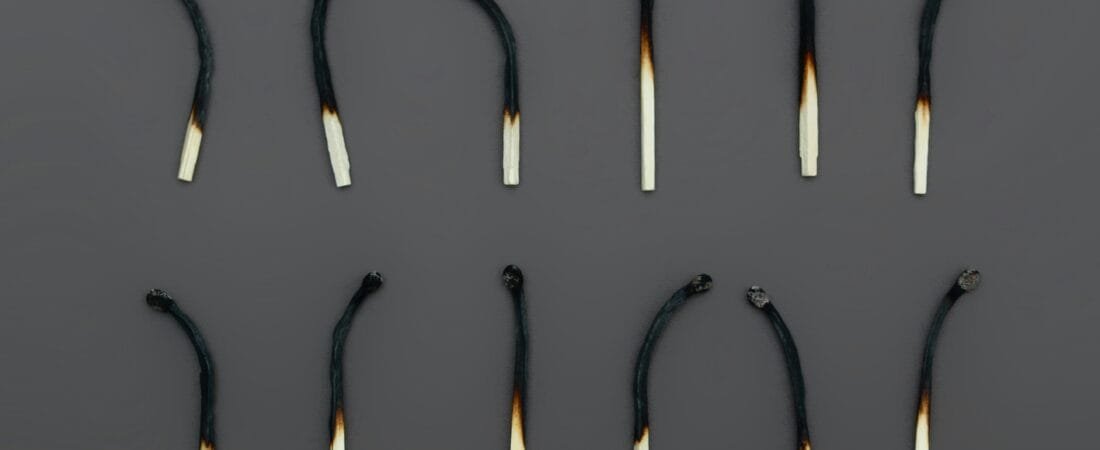
Burnout can be sneaky.
It doesn’t show up in a dramatic fashion, nor does it come instantaneously. Instead it shows up slowly, like a candle burning at both ends until one day you wake up feeling empty in places you barely noticed were once full. The fuel that used to energize you — your passions, curiosity, pride in your work, care for others, sense of purpose — feels strangely distant. And even when you try to rest, the exhaustion doesn’t leave. It stays. It lingers in your bones and in your thoughts.
Most of us think burnout is just being really, really tired. But once you’ve lived it, you know it’s more complicated than that: burnout is the place where your emotional, physical, and mental reserves run dry from relentless stress and pressure. It can come from work, family demands, caregiving, school, or any role where you continually give more than you receive. It’s not a sign of weakness. It’s a human response to carrying too much weight for too long (Mental Health America).
In this post, let’s talk about how burnout feels, why it happens, and (most importantly) how you can begin to recover in ways that are evidence-backed.
What Burnout Really Feels Like
Burnout creeps in slowly, almost invisibly, until one day you look around and wonder how everything got so heavy.
People describe it in many ways, but these experiences have become familiar in conversations with friends, clients, and readers:
- You wake up exhausted, even after a full night’s sleep.
- Your body aches without explanation, or you feel tension and headaches more often than not.
- Tasks that once felt energizing now feel like chores.
- You might feel irritable, disconnected, or numb, like you’re merely going through the motions.
- You can’t focus. Your mind feels foggy. You find yourself making mistakes you never used to make.
Burnout also shows up emotionally and socially. You may find yourself withdrawing from people you love, feeling cynical about tasks and interactions you once enjoyed, or feeling overwhelmed by things that used to feel manageable.
Why Burnout Happens
Burnout is most often tied to chronic stress that doesn’t let up. It is commonly associated with work, but it isn’t exclusive to any one setting. It arises whenever your demands consistently outweigh your resources — emotionally, mentally, or physically (Psyche).
Some common contributors include:
- Constantly heavy workloads or unrelenting responsibilities
- Roles with emotional intensity or high expectations
- Lack of recognition for effort
- Feelings that your values don’t match the expectations placed on you
- Minimal support at home or at work, especially when everyone expects more from you than you have to give.
This doesn’t mean burnout is your fault. It means you’ve been pushed past what your nervous system and spirit can comfortably manage, without enough space to breathe, rest, or replenish.

How Recovery Begins: First Steps You Can Take
There is no overnight fix for burnout. Healing from it is like learning to slow your breathing again after running a marathon. But there are concrete practices backed by research and experience that support recovery, even in small, gentle ways.
1. Give Yourself Permission to Rest
Rest isn’t indulgence. It’s essential. When your body and mind have been running on empty, trying to push through with force only makes things worse. Creating space to rest, even in tiny moments, recalibrates your nervous system. This might look like taking a short break in the middle of the day, sitting outside without doing anything, or letting yourself nap without guilt.
Sleep, in particular, matters. When you start prioritizing not just quantity but quality of sleep, keeping a consistent bedtime, reducing screens before bed, or using calming pre-sleep routines, your body begins to shift out of survival mode (Animo Sano Psychiatry).
2. Set Boundaries Everyday
When you are burned out, saying no feels hard and yet essential. It might be setting limits on work hours, declining extra responsibilities, or choosing not to respond to messages after a certain time. Boundaries help protect your energy and teach others how to treat it.
Boundaries can also look like taking micro-breaks during your day, like stepping outside for a few minutes of quiet, breathing slowly between tasks, or eating a meal without multitasking. These small pauses give your nervous system the chance to reset, even in the middle of a busy schedule.
3. Move Your Body in Ways That Feel Good
You don’t have to train for a marathon. There is strong evidence that even gentle physical activity, like a walk outside, stretching, yoga, or rhythmic movement can reduce stress hormones and boost your mood. Moderately active moments help your brain shift out of chronic fight-or-flight tension (HelpGuide.org).
Movement reconnects you with your body in a positive way. It reminds your nervous system that rest and motion can coexist.
4. Reconnect With Meaning, Purpose, and Joy
Burnout often steals your sense of meaning. Things that once mattered begin to feel flat or hollow. One of the most powerful parts of recovery is rediscovering what gives you a sense of purpose outside of stress and obligation.
This might be something as simple as:
- Reading a book you love
- Painting or making something with your hands
- Spending time with people who make you feel genuinely seen
- Getting lost in nature on a quiet walk
- Practicing something that reminds you why you chose your path in the first place
These are restorative acts that help you remember that your identity is not defined by productivity alone.
5. Seek Support and Connection With Others
Burnout isolates. It makes you feel like you’re the only one carrying the weight of your responsibilities. But connecting with another human who really listens, like a friend, partner, or therapist, reminds you that you are not alone.
Talking about what you’re experiencing, without fear of judgment, gives your emotional system permission to soften. Support can come from many places: close friends, community groups, online spaces of understanding, or professionals trained to help you navigate burnout’s complexity.
6. Use Psychological Tools That Help You Think Differently
Therapeutic tools like mindfulness and cognitive reframing can be powerful in burnout recovery. Mindfulness helps you notice your moment-to-moment feelings without overwhelm. Cognitive reframing teaches you how to observe negative or self-critical thoughts and respond to them with perspective and compassion. Both practices slow the mental chatter that fuels exhaustion. (Aspen Counseling).
These practices do not make stress disappear. They make your inner world easier to navigate. They help you see that while stress is part of life, it does not have to take over your life.

A Gentle Reality About Recovery
Recovery from burnout is seldom linear. Some days you will feel progress, and other days you will feel stuck. This is normal. Healing takes time, patience, and sometimes more rest than you think you need.
But there is good news. You can recover. Many people do not just return to where they were before. They come out on the other side with deeper self-understanding, a clearer sense of priorities, and a stronger ability to protect their well-being in the long run.
Burnout happens when life asks too much of you without replenishment. Recovery begins the moment you start asking something of yourself in return: attention, care, presence, and compassion.
You are more than your productivity. You are more than your to-do list. And you deserve a full life, not just the illusion of one.
Disclaimer: Content related to journaling, meditation, or emotional well-being is intended for informational and inspirational purposes only. It does not replace professional mental health care, therapy, or counseling. If you are struggling with mental health issues, please seek help from a licensed mental health professional.
This blog shares general fitness and wellness tips based on personal experience and research. It is not intended to substitute medical advice, diagnosis, or treatment. Always consult your physician or a qualified healthcare provider before starting any new workout, diet, or health routine. Use of any information on this site is at your own risk.
You Might Also Like:
Emotional Fitness: Daily Microinterventions to Strengthen Your Mental Resilience