
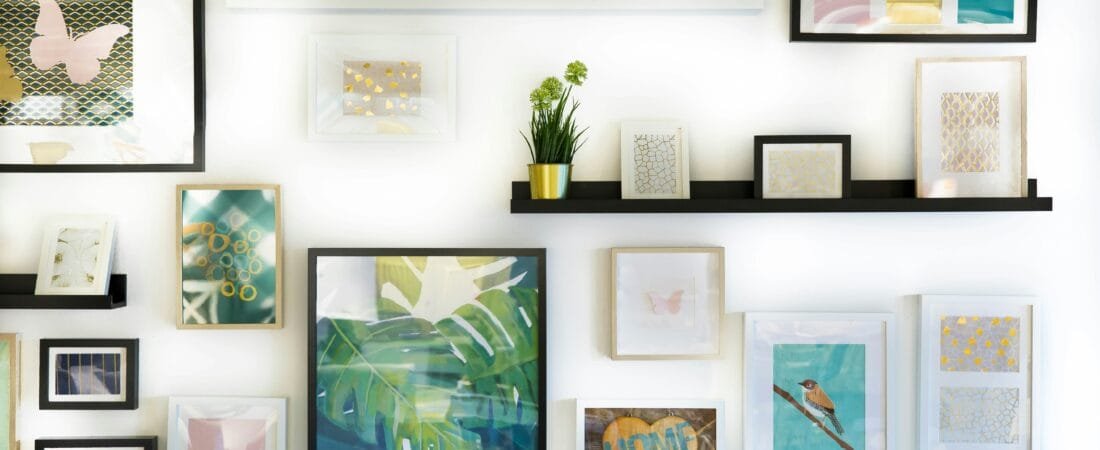
A gallery wall is one of those simple, creative ways to tell a story without saying a word. It brings warmth into a room. And when done thoughtfully, it can turn an empty wall into something that feels unique, connected, and almost alive.
Start With a Common Thread
Before you even hang a single frame, this is the most important part.
A gallery wall works best when there’s something tying everything together, a subtle sense of cohesion that makes it feel intentional instead of scattered.
That “common thread” can look like:
- The same frame shape
(All squares or rectangles, just in different sizes or orientations) - The same frame color
(A mix of shapes—rectangles, ovals—but all in gold, black, or wood tones) - A shared color palette within the artwork
(Soft neutrals, warm tones, or even black-and-white photography)
It doesn’t have to be a rigid rule, but it’s a helpful guideline to help make it feel like everything belongs in the same conversation.
Anchor the Wall With One Central Piece
Once you have your theme, start with a focal point: a larger, central piece to anchor your gallery wall.
This piece draws the eye first, helps create structure, and gives the rest of your layout something to build around.
Sketch It Out First
It might feel tempting to jump straight into hanging frames, but taking a moment to plan can save you a lot of guesswork later.
Grab a sheet of paper and lightly sketch where your central piece will go and how the surrounding frames might be arranged. This is just a way to visualize spacing and balance before committing.
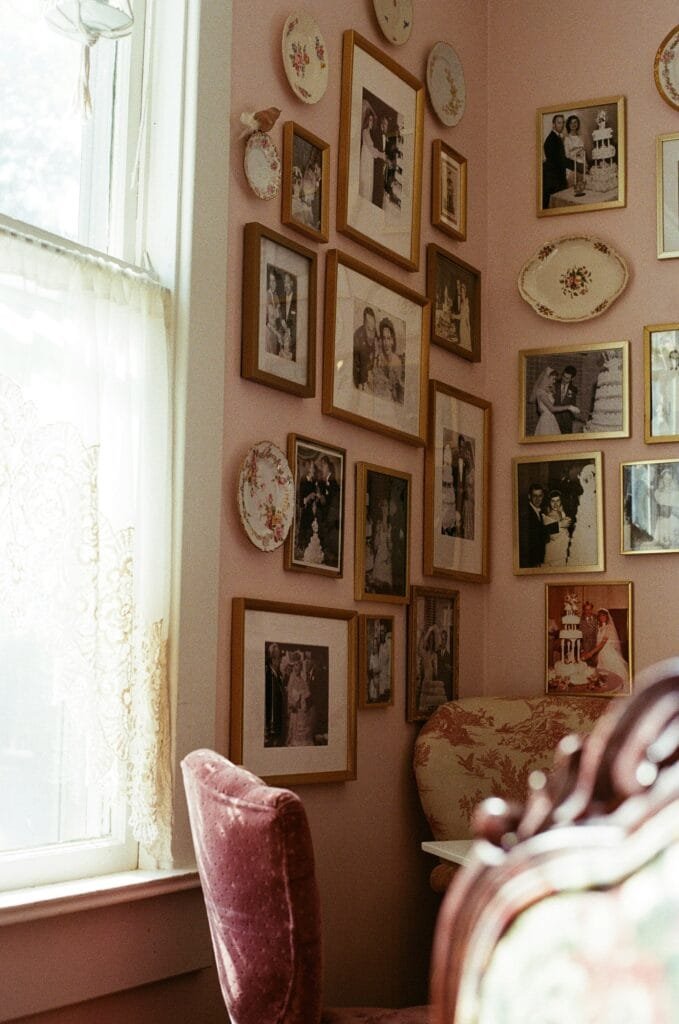
Keep Your Spacing Tight and Intentional
This is one of those small details that makes a big difference. Try to keep the gaps between frames around 2–3 inches, because spacing affects how everything feels. The pieces tend to feel disconnected when they’re too far apart, so moving them closer together helps the gallery wall feel more deliberate and curated.
Choose Your Frame Sizes and Shapes
Now that you have a rough layout, you can decide on the exact frames. Mixing sizes works beautifully, as long as your common thread is still there.
You might choose:
- A large central piece
- Medium frames around it
- Smaller accents to fill in gaps
Let it feel balanced, not overly symmetrical.
Test It on Your Wall
Before you start putting holes in your wall, here’s a simple trick that makes everything easier: Use painter’s tape or trace your frames onto kraft paper, then cut them out.
Tape those outlines onto your wall where you plan to “hang” each piece.
This lets you:
- See the layout in real time
- Adjust spacing and placement
- Get a true sense of how it will look
It’s like a preview, which will help give you confidence before making anything permanent.
Final Thoughts
A gallery wall doesn’t have to be complicated. At its core, it’s about:
- Choosing a common thread
- Anchoring your layout
- Planning your spacing
- Testing before committing
And most importantly, making it feel unique to you.
Disclaimer: All decorating ideas and home advice shared on this blog are based on personal taste, style, and experience. Results may vary depending on materials, tools, and individual preferences. Always use caution when using tools or altering your living space, and consult professionals when needed.
You Might Also Like:
Holistic Home Decor: Decorating with Intent for a Happier Living Space
Cozy on a Budget: Decorating for the Holidays Without Breaking the Bank